A beginner’s guide to the paper cords, decorative envelopes and gift-giving customs behind our work.
New to mizuhiki? Start with the cord itself, then explore two kinds of Japanese gift envelope. The photographs show pieces by mizuhikimie; they are examples of our work, rather than a list of items currently for sale.
Mizuhiki · Giving money · Shugi-bukuro · Pochi-bukuro · Choosing a piece
What is mizuhiki?
Mizuhiki is a Japanese decorative cord with a paper core. Narrow strips of washi, Japanese paper, are twisted into a fine strand, coated with paste and dried. The cord can then be colored or wrapped with decorative material. Several strands can be tied together to create a knot or a more elaborate shape.
Traditionally, mizuhiki accompanies gifts and ceremonial envelopes. Its lines can form simple knots as well as birds, flowers and other motifs. Contemporary makers also turn the cords into jewelry and decorative objects. The same material can be both part of a gift’s wrapping and a piece to enjoy in its own right.
Why give money as a gift?
In Japan, money is a customary gift at weddings and other celebrations. It is presented in a special envelope, often decorated with mizuhiki. The envelope gives the gift a considered presentation, rather than leaving the banknotes exposed.
For someone seeing these pieces for the first time, the useful distinction is between the envelope and what it holds: the envelope is the wrapping, while the money inside is the gift. A beautiful envelope is therefore made to be used in the act of giving.
What is a shugi-bukuro?
A shugi-bukuro is an envelope for a monetary gift to mark a happy occasion. Wedding gifts are a familiar example. The decorative outer paper and mizuhiki are the parts you usually see first; some designs also have a separate inner envelope or folded paper to hold the banknotes.
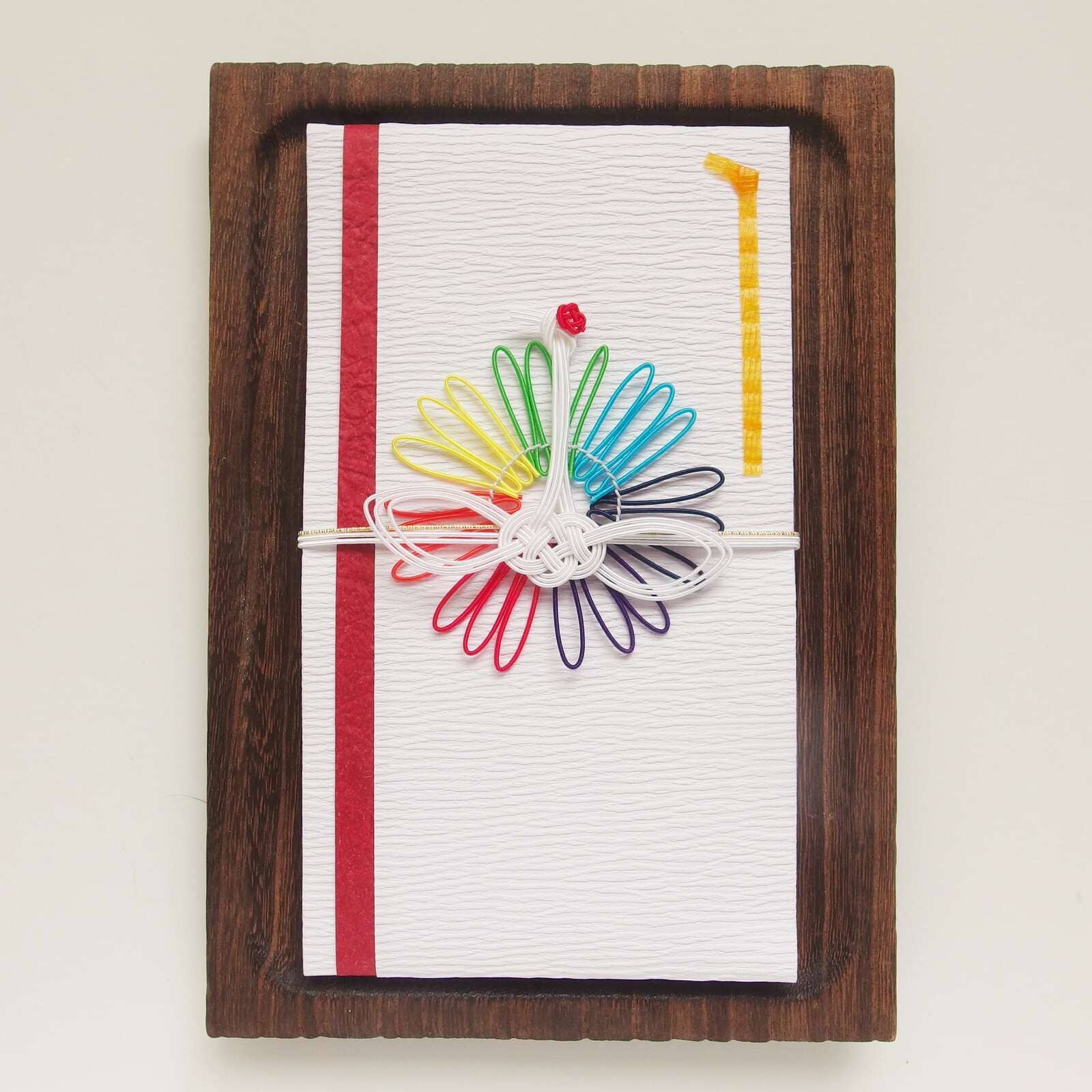
In this piece, colored cords form a crane across the front of the envelope. Look closely at how the narrow strands become wings and how the white knot sits against the paper. The photograph shows the outside of the piece; check the individual listing for dimensions, included components and instructions.
When preparing a gift, follow the instructions supplied with the envelope. Avoid pulling apart the decoration to find the opening. For a formal event, ask your host or someone familiar with the occasion about the appropriate envelope and wording before choosing.
Shugi-bukuro and pochi-bukuro
Pochi-bukuro are small envelopes for gifts of money and little gestures of appreciation. A well-known use is otoshidama: money given to children at New Year. They also appear in casual exchanges, including enclosing a short message. Designs range from playful illustrations to quieter patterns and decorative knots.
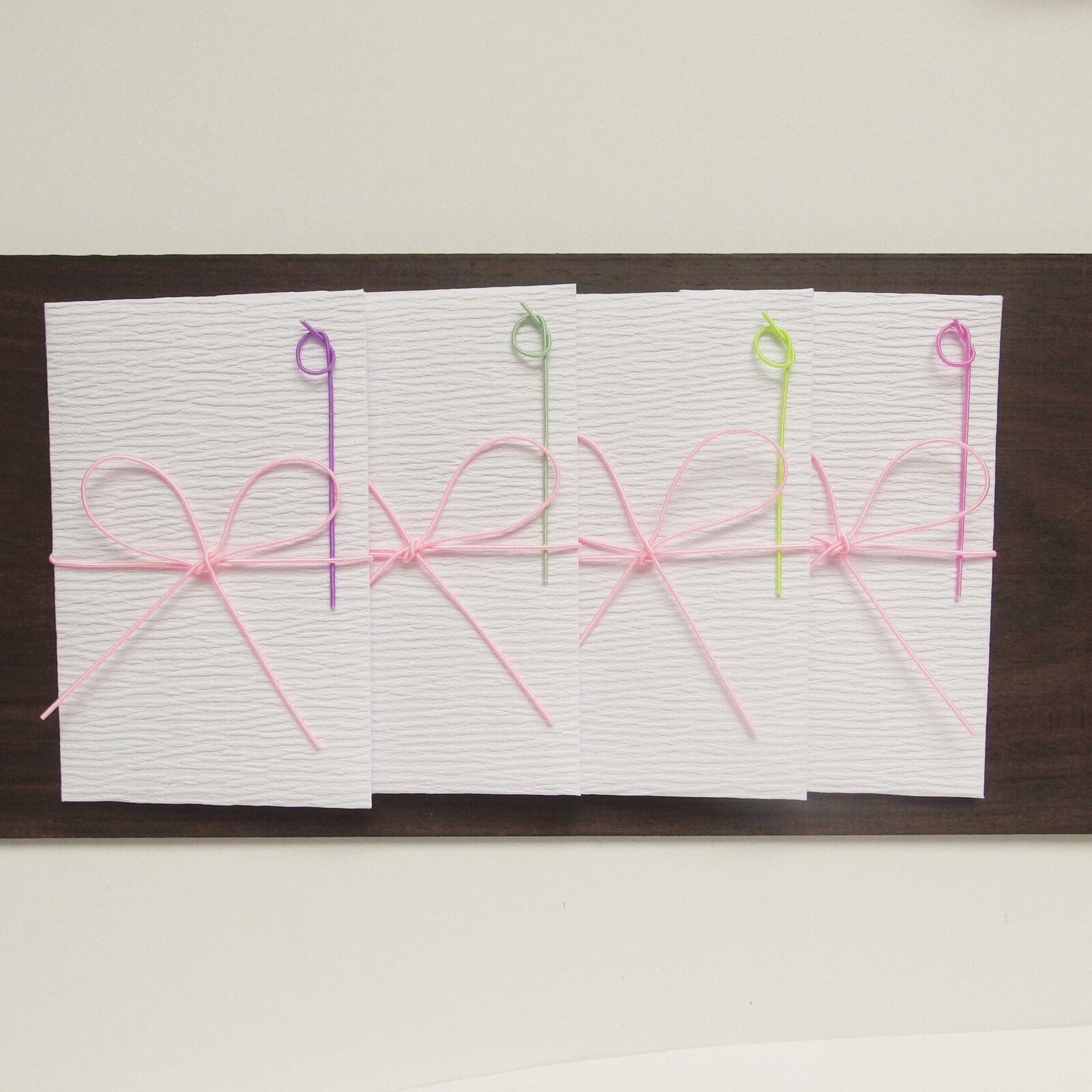
Think of the distinction as a starting point: a shugi-bukuro presents a celebratory monetary gift, while a pochi-bukuro offers a smaller format for a modest gesture. Size and construction vary between products. Check whether a particular envelope suits what you want to put inside, rather than judging its capacity from a photograph.
Choosing and enjoying mizuhiki
Begin with how you want to use the piece. Are you preparing a gift envelope, wrapping a small thank-you, or looking for an accessory to wear? Then look at the colors, shape and scale. You can explore the craft through everyday accessories as well as through gift-giving.
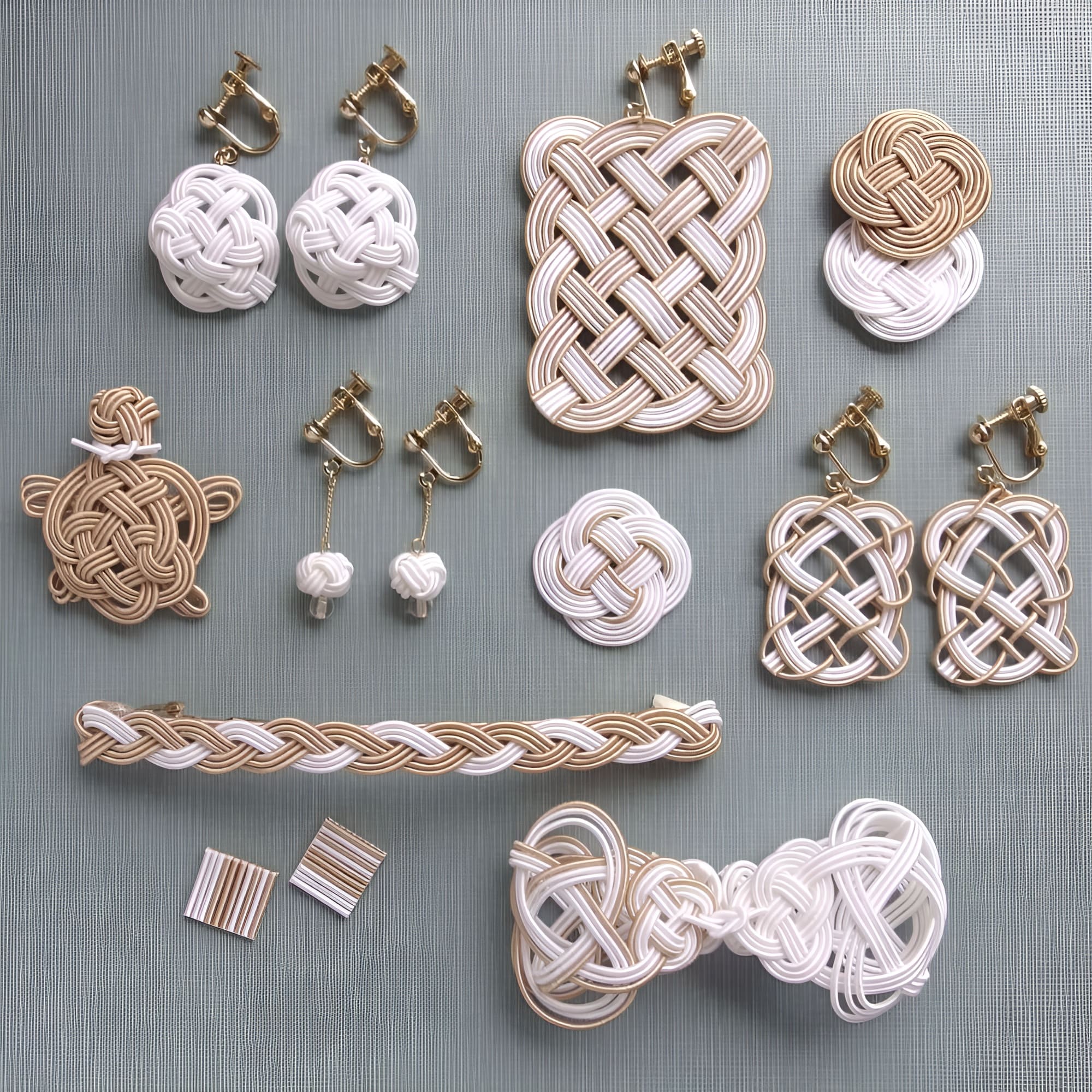
Our collection introduces gift envelopes, small envelopes and accessories. For current availability, materials, prices and care instructions, read the individual shop listings. Orders and payments take place on the external shops. If you need delivery outside Japan, confirm the destination and shipping terms with the shop before ordering.
Explore the collection →
Find our online shops →
About mizuhikimie →
Further reading: Mizuhiki — Highlighting Japan · Pochi-bukuro — Web Japan. These resources introduce the wider craft and cultural context.